-
WHATSAPP ENQUIRY
+6017-472 4260 -
238, Jalan Macalister
10400 Penang, Malaysia -
Language
Introduction
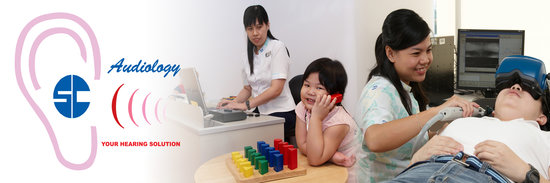
The Audiology Department of LohGuanLye SPECIALISTS CENTRE (LSC) provides technology to detect, diagnose and treat children and adults with hearing, communication and balance disorders.
Audiologists work with people of all ages, from babies to older adults who may need to be screened for suspected hearing loss and fitted with hearing aids or other assistive listening devices.
Newborn Hearing Screening
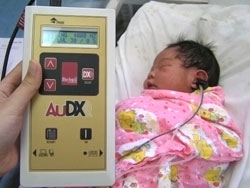
Hearing loss is a silent and hidden disability. It could not be seen and babies could not tell us if they are unable to hear well. Approximately 3 babies out of 1000 are born with hearing loss in both ears. Therefore, all babies born in LSC will undergo hearing screening at birth. This is a painless, simple and non-invasive hearing screening procedure which detects possible hearing loss in newborn baby.
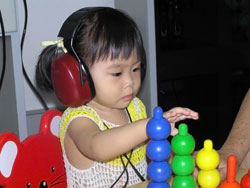
Diagnostic Hearing Test for Children
Comprehensive behavioural hearing assessment:
Visual Reinforcement Audiometry (VRA) for children as young as 6 months of age
Play audiometry is a hearing test for children from 3 to 7 years old
Electrophysiology examinations (computerised hearing test), for children of all ages:
Auditory Brainstem Response (ABR)
Auditory Steady State Response (ASSR)
Assessment and management of children with Auditory Processing Disorders (APD) is available for individuals with normal hearing but have difficulties in processing the speech sounds heard. This may lead to learning difficulties, poor academic performances and impaired social skills.
Diagnostic Hearing Test for Adults
Various diagnostic tools such as pure tone audiometry, speech test and middle ear analyser are being used to detect hearing problems in adults.
Hearing Aids & Assistive Listening Devices
To help patient to hear better (again), custom made or fit-to-go hearing aids are available for a variety of causes and degrees of hearing loss. These hearing aids are not only fitted on the degree of hearing loss but mainly on the degree of handicap. Individuals become candidates for hearing aids when the hearing loss affects them socially, economically, financially or psychologically. Assistive listening devices will be recommended when necessary to improve patients' abilities to cope with daily life activities.
Cochlear Implant Programme
Cochlear implant is an electronic device that restores hearing to the deaf. It is surgically implanted in the inner ear and activated by a device worn outside the ear. Unlike a hearing aid, it does not make sound louder but it bypasses damaged parts of the auditory system and directly stimulates the hearing nerve, allowing individuals who are profoundly hearing impaired to receive sound.
Middle Ear Implant Programme (BAHA & BONE BRIDGE)
Bone Anchored Hearing Aid (BAHA) and Bone Bridge systems are implantable electronic devices which transmit sound through direct bone conduction to the inner ear. Middle ear implant is suitable for individuals born without external ear canal and/or pinna as well as for those with single-sided deafness (SSD).
Tinnitus Retraining Therapy
The audiologists conduct Tinnitus Retraining Therapy (TRT) to help patients experiencing or suffering from tinnitus (ringing in the ear) and/ or hyperacusis (reduced tolerance to loud sound). TRT is a habituation-oriented approach involving counseling and sound therapy.
Vestibular Rehabilitation
The majority of patients afflicted with an acute balance disorder recover spontaneously with only symptomatic treatment from medical professionals. However, due to the poor understanding on the balance disorders, some of these patients develop chronic balance system problems requiring extended evaluation and treatment. Patients suffering from dizziness could undergo a balance function test such as videonystagmography (VNG) to detect the site of lesion. Once the cause of inner ear imbalance is established, vestibular rehabilitation will be conducted to restore the balance.
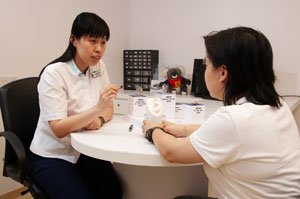
Hearing aids fitting & services